The trailer was delivered early in the morning, directly to my house, and was parked in my side yard. It’s both exciting and nerve-racking the first time you see your trailer because it suddenly becomes real. Once that trailer is parked and the delivery man drives away, you’re building that house whether you like it or not.
The planning, however, begins well before the trailer arrives. You face several decisions right off the bat, three of which will be unchangeable and will lay the foundation for the entire project. Not an easy way to start, but perhaps being immediately thrown into the deep end is a good thing, because it helps people decide whether they truly want to dedicate a large chunk of both time and money to building a house that’s about the size of a child’s backyard fort. The immediate decisions are as follows:
1. What do you want the structure of your house to look like?
This will dictate which plans you buy. I bought my plans from the Tumbleweed Tiny House Company, but if you search their website and aren’t in love with any of the tiny house plans they offer, then search other websites and see what you can find. Choosing plans for a tiny house that you are in love with and desperate to see come to life is imperative in helping you stay motivated and excited throughout the building process.
2. What size trailer do you want?
The decision between a 24ft or 26ft long trailer might seem trivial at first but every square inch is precious in a building as small as a tiny house. I chose a 24ft long trailer with a design for a loft, which helps maximize space. I’m happy with my trailer, and I’ve run into more issues with the width than the length. However, my bathroom is looking like it’s going to be rather cramped, so I can definitely see an extra 2ft being helpful. That said, it is completely a matter of personal preference, people have even built tiny houses on trailers that are just 20ft long.
3. What kind of trailer do you want?
This may seem similar to the previous question, but, it is actually a completely separate issue and the one that we will discuss in-depth shortly.
4. Where do you want the trailer parked?
Whether or not this becomes the permanent site for your trailer, choosing a location that is close to power outlets and near a place you can store your tools until your frame is up and you can put them in the house, will make your life a lot easier. You should also keep in mind that if the trailer is parked on grass, all of the grass underneath the trailer will die, and if the ground is too soft then you may want to fill the areas beneath the trailer’s supports with rocks and put wood under the wheels so that the trailer doesn’t sink.
Now that you know the four initial questions and the thinking behind three of them, I’d like to delve into the one we haven’t talked about in detail, yet: “What kind of trailer do you want?” Your trailer is your foundation, and what type of trailer you choose, as well as where you decide to get it, will determine where you start your tiny house project. Furthermore, each type of trailer poses certain limitations in the future.
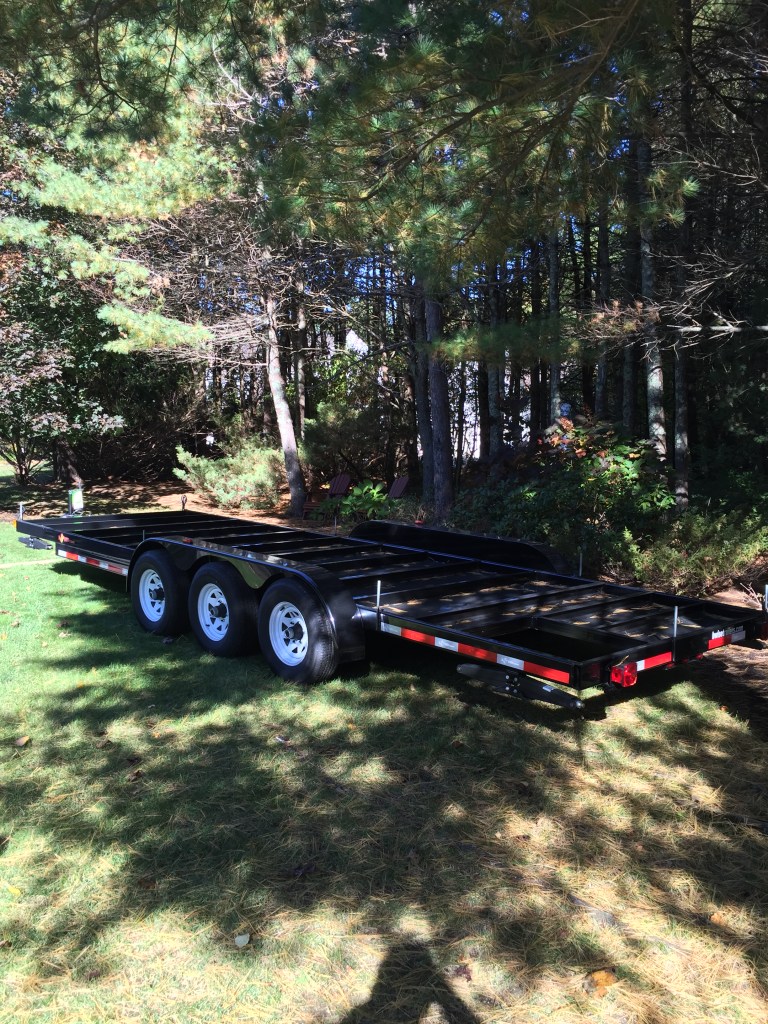
Because their trailers are specifically designed for tiny house building, I ordered my trailer straight from Tumbleweed; this alleviated the need for welding. Welding can be pretty difficult and pretty dangerous, plus it requires a lot of tools that you’ll probably never use again unless you discover a love for welding, but if you want to give it a go, then by all means build the trailer of your dreams.
There are some pros and cons to a Tumbleweed trailer vs. a regular trailer, besides welding, that you should take into consideration before making a decision. As you can see in the picture of my trailer, it has a built-in subfloor. You can easily buy sheets of insulation, cut them into correctly sized pieces, and pop them in place between the ribs, like so:

The next step is to add pieces of wood all around the sides of the trailer so that they’re flush with the subfloor. This gives you a couple of extra inches on all sides and something to nail your walls into besides the metal of the trailer. Make sure to buy self-tapping screws for this, because drilling into metal without them is extremely difficult. Once the wood skirt is on the trailer, you can cut large, even pieces of plywood and lay them down for the subfloor:
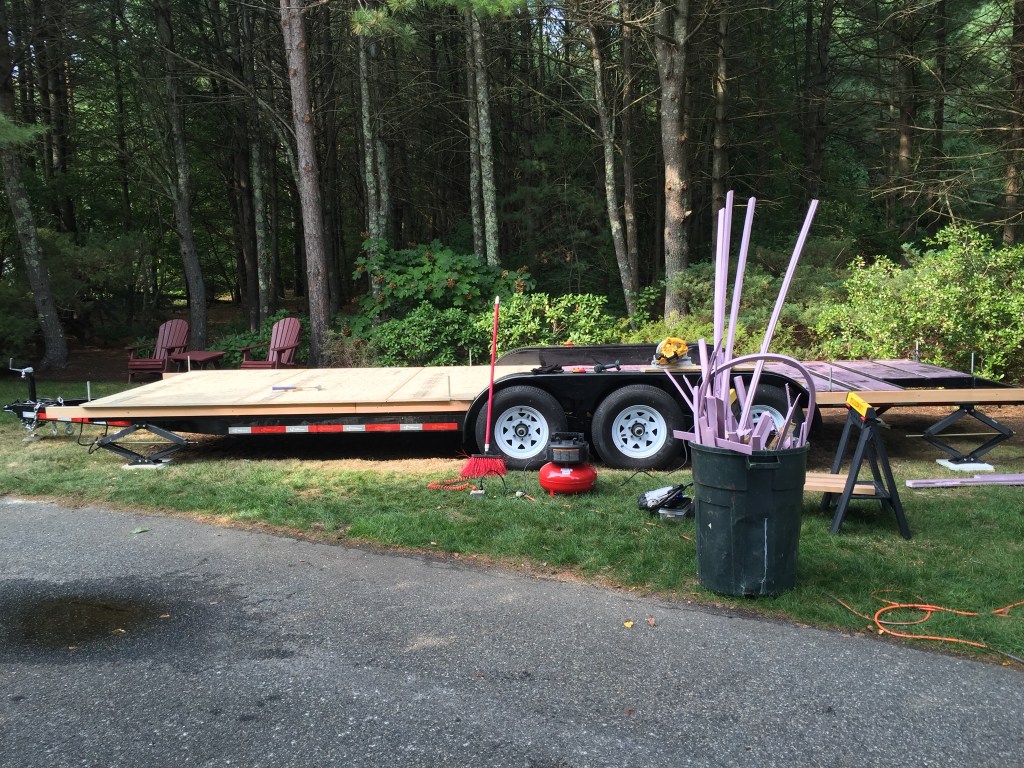
Basically, the Tumbleweed trailer makes the process of building your subfloor really easy and gives a nice first step into construction for anyone who has never done it before. You’ll have your subfloor down within a couple of days, and you’ll be ready to start building walls, which, in my opinion, is when things start getting fun.
Tumbleweed trailers also come with hurricane rods, which help secure the house to the trailer and make sure it won’t blow away on a windy day. The built-in subfloor will save you some serious headspace, because with a normal trailer you’ll be building the subfloor on top of the trailer instead of having it embedded in the trailer. This space is invaluable if you’re going to have a loft (and because of the state by state vehicle height restrictions you can’t just make your house taller), but there is a downside to this choice: the embedded subfloor makes it more or less impossible for you plumb your house through the floor, which means you have to be very careful about the structural integrity of your building as you’ll have to plumb through the walls. Additionally, and here’s the real kicker, you won’t be able to have the nice heated floors that come with warm water plumbing through your subfloor.
If, in the end, you decide to go with welding a regular trailer to your liking, then you can have both my respect and a couple of tips. First, Make sure the trailer you buy is made to support the 10,000+ pounds you’ll be putting on it, and that it has the brakes required to stop it when you’re going down the road. Second, a dovetail trailer is going to make your life a lot harder because the entire back will need to be taken off and then welded back on to make it level with the rest of the trailer. Finally, you’ll need to be careful in planning out the required headspace if you decide to go with a loft design.
That’s it for me today. Hopefully, you learned something new or at least enjoyed the journey. Have a great day! And remember, if you decide to build a tiny house and only make it this far, you can still use it as a portable porch!
Disclaimer: I am not a certified contractor. All information and advice result from personal experience and should not be taken as professional guidance or used as step by step instructions on how to build a house. This is simply an attempt to give insight into the decision making process and to share my own journey building a tiny house. Not all information may be accurate to your situation, and personal research is encouraged before making any decisions.
 Tiny House Big Job